Reading Group Guide
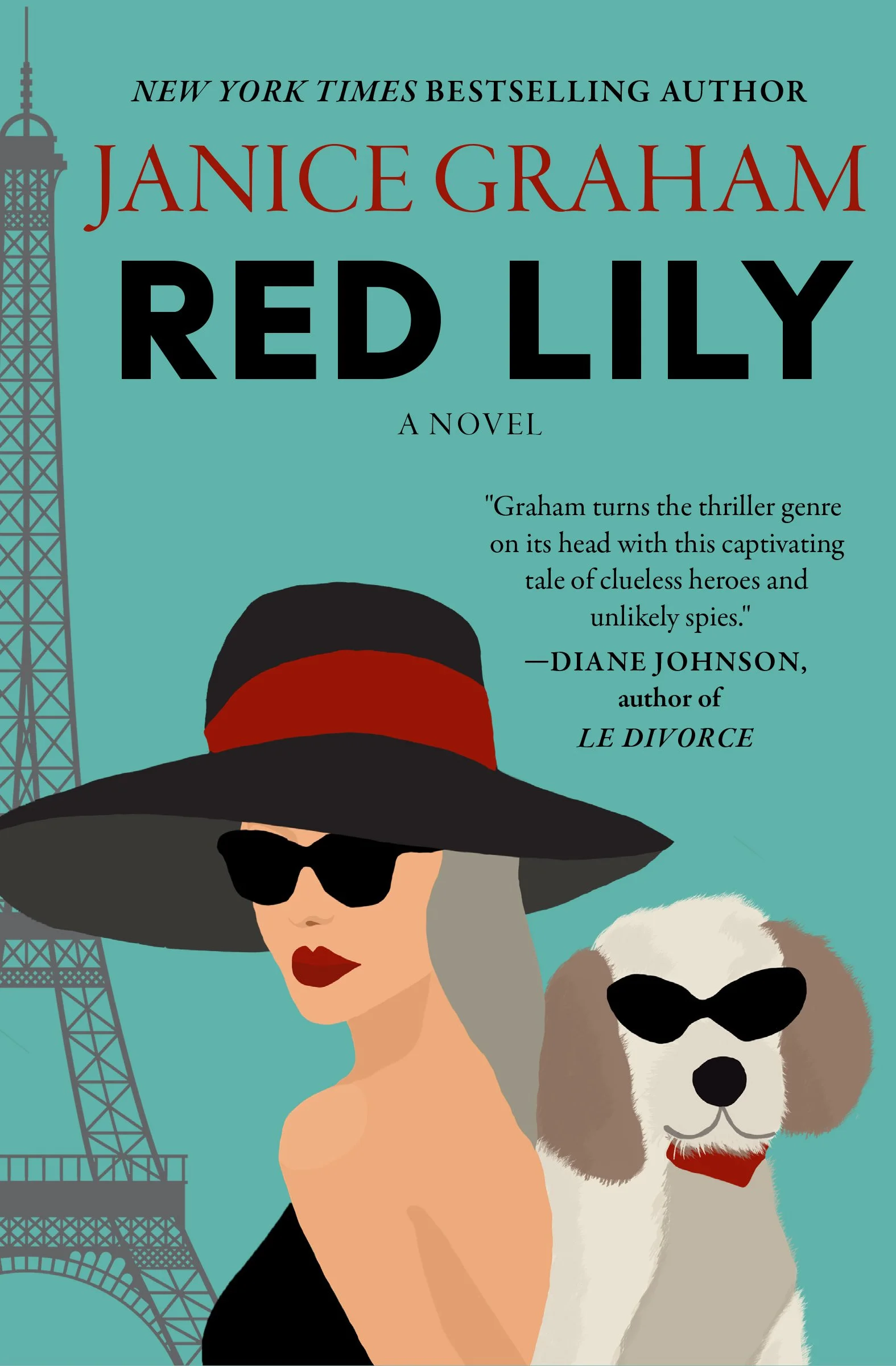
Red Lily
Discussion Questions
1. When the novel begins, Carl has no interest in travel, but he soon finds himself forced to navigate dangerous situations in a foreign culture and language. Have you or has anyone you know ever considered living abroad? What challenges would they face?
2. How does the Paris setting enhance the story and Carl’s transformation? Do you think people feel free to reinvent themselves in a foreign city? What elements of the French culture does Carl find difficult to navigate? What makes him feel like an outsider? What makes him feel more alive?
3. Carl discovers that everything he had been led to believe about his aunt was entirely false. Do you know of any situations where family or friends have been falsely misrepresented because of personal jealousies or grudges? Have you ever been forced to rethink your opinion of someone when faced with truths that contradict your beliefs?
4. There have been notable crime novels and TV series featuring older women sleuths, such as Murder She Wrote or Agatha Christie’s Mrs. Marple series. How does Lily’s character fit into that tradition? Or does it? (I do want to engage the reader in the question of her age. And particularly an action herioine her age. Do you have any suggestions?)
5. What do you think of Carl’s decision to keep Lily’s secret? Do you think Lily’s silence was justified? (Can I make this stronger?)
6. Were there any historical aspects of the novel that you found instructive, such as the impact of the polio vaccine, the tradition of samizdat and the fall of the Berlin Wall? How has the novel increased your understanding of the Cold War period and the fracturing of the Soviet Union?
Q&A with the Author
Q: Your previous novels have all been women’s fiction or historical fiction. Why this change in direction?
A: I wanted to write a story about a woman who had been unjustly maligned by her family. To reveal her through the eyes of a young relative who had been told malicious lies about her. I also enjoy espionage, in both novel and film. I’m a huge James Bond fan, and Graham Greene has long been one of my favorite authors, not only for his espionage titles, but also for his “entertainments” like Travels With My Aunt and Our Man in Havana. All those influences made their way into RED LILY. I didn’t set out to write in a particular genre, but to tell a good story and create entertaining characters.
Q: The humor is also something that’s new for you.
A: It shouldn’t be, since I enjoy making people laugh. I started this novel during COVID lockdown. It was not a funny time, so I wrote characters and situations that made me laugh. The humor just came naturally. Some of the scenes made me laugh out loud when I wrote them. I think it’s the most authentic voice-driven narrative I’ve ever written.
Q: Your note at the end of the book states you were inspired by the true story of Vasily Mitrokhin. But there’s a lot more going on than that in the story.
A: The Mitrokhin files inspired the MacGuffin in the plot (a MacGuffin is a device or object that motivates the characters and moves the plot forward), but the human story was inspired by an aunt of mine. She wasn’t anything like Lily – she could be pretty awful at times – but she was also adventurous and fiercely independent, which was unusual for her time. I admired her. I always thought she was unfairly demonized by our family.
Q: The Paris setting plays a huge role in the novel. It made me start looking up hotels on Tripadvisor, much to my husband’s alarm. You really know the city well.
A: My attachment to Paris goes way back. I first came here when I was studying for my M.A. in French literature, and I’ve lived here on an off over the years. I was living in Paris during COVID, and writing this novel enabled me to take myself on imaginary tours of the city. It was a great ride.
Q: Why did you choose this time period, 1989?
A: The fall of the Berlin Wall in November of 1989 was the beginning of the collapse of the Soviet Union and the end of the Cold War. This was a momentous turning point in history. Many younger readers are unfamiliar with these events and the hope they brought to people who had lived for generations under repressive authoritarian regimes. It’s history that deserves our attention, particularly in light of the rise of authoritarianism in the world today.